
School food leaders explore ways to improve funding model
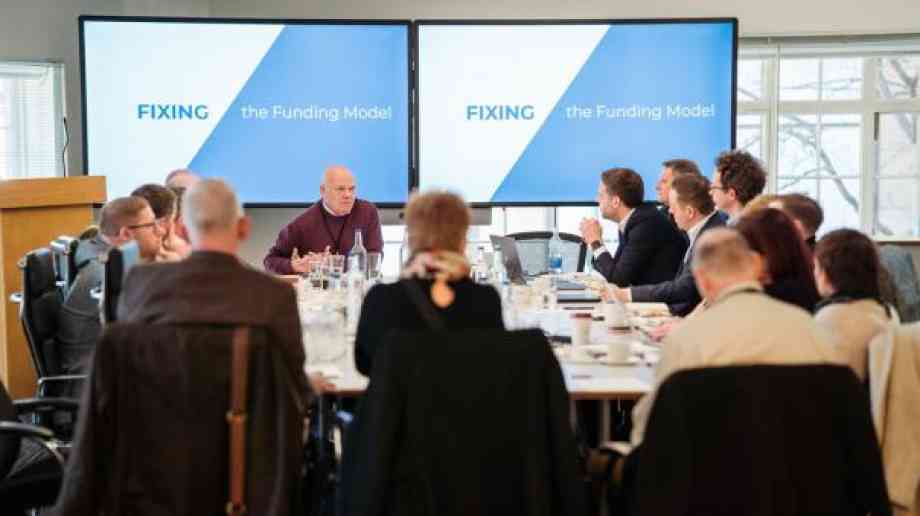
School food leaders have met in London to explore alternative ways of funding school meals in England, amid growing concern over rising costs and financial pressures on providers.
The roundtable, organised by The School Food People (TSFP), brought together local authority caterers, not-for-profit organisations, contract caterers, consultants, academics and representatives from the Department for Education to discuss how the current system could be reformed to reduce disparities between large and small schools and between those with varying numbers of disadvantaged pupils.
Brad Pearce, chair of TSFP, said the current rate of £2.61 per meal was no longer sustainable. He warned that six or seven local authority catering services had already announced plans to close this year. Labour costs have risen by 28% in recent years, he said, while combined food and labour costs have increased by more than 50%, alongside a 19% rise in employers’ National Insurance.
Professor Greta Defeyter of Northumbria University said the crisis had been worsened by fragmentation in both the school and catering systems, as well as multiple, poorly coordinated funding streams. She also highlighted school dinner debt as a significant but largely unknown strain on budgets and questioned the reliability of the current “census day” method for calculating uptake.
Professor Paul Stretesky of the University of Lincoln examined the potential impact of replacing the per-meal payment with a £495 annual lump sum per pupil, based on 85% uptake. While the change could make funding fairer for smaller schools, he cautioned it might widen the gap between schools with high and low numbers of pupils eligible for free school meals.
Adam Curtis of Dolce Catering presented figures suggesting a blended model – combining a reduced free school meal rate, a £495 annual lump sum per pupil and a paid meal price of £3 – could create a more level playing field for most schools.
However, Luke Consiglio of The Pantry warned that introducing a new system could take too long, with some providers at risk of going out of business before reforms are implemented. Neil Fuller of Caterlink argued that the root problem lay in overall school funding, which he said was too low and pushed headteachers to prioritise the cheapest catering options.
Closing the discussion, Pearce urged sector leaders to contribute to the forthcoming inquiry by the All-Party Parliamentary Group on School Meals and said TSFP would work with participants to take proposals forward.
Read moreLatest News

14/04/2026 - 10:11
New research suggests that eight out of 10 people (80%) back banning cars in streets around schools to encourage children to travel by healthier alternatives.
14/04/2026 - 09:47
The government is proposing that schools appoint a lead governor with designated responsibility for school food, as part of its reforms to school food standards.

13/04/2026 - 09:39
The government has set out plans to reform School Food Standards - the first time in over a decade - and is launching a nine-week consultation on the changes.

10/04/2026 - 11:16
The government is launching a new programme to support schools in areas of high knife crime and improve pupils’ safety on their way to and from school.

09/04/2026 - 10:27
A school food improvement programme is set to launch in Birmingham in 2026, working with schools to improve the quality and culture of food throughout the school day for children and young people across the city.