
Outdoor learning – key to meeting enrichment goals
Jo Harris, education manager for the Field Studies Council, explores how outdoor learning experiences can help achieve the government’s newly proposed ‘outside the curriculum’ enrichment goals
The modern educational landscape is undergoing a necessary transformation, driven by the curriculum and assessment review and the idea that traditional, knowledge-centric curricula alone are insufficient to prepare students for 21st-century life and work. The children who started school in September 2025 will be in their thirties by the 2050s when the UK aims to reach net zero carbon emissions.
The government’s Climate Literacy in School Leavers Report states that more than half of school leavers said they had been taught about climate change in the last year (one in 10 couldn’t remember when) and that just over a quarter said they did not know how much the climate has warmed. Eight in 10 school leavers were concerned about climate change and seven in 10 believed they will be impacted by it.
It’s clear the climate crisis is high on young people’s agendas.
We also know many young people are interested in sustainability careers despite not always knowing how to get started on this career pathway.
To quote a Field Studies Council Youth Panel member: “Nature connection isn’t just for geographers or biologists - it’s for artists, engineers, teachers, designers, and beyond. Every subject and career can hold space for the natural world.”
A study by Miles Richardson at the University of Derby, shows nature connection among teenagers is dropping. His work, which looks at the time people spend in nature, highlights a significant dip in connectedness from 11 years old, with recovery by the age of 30.
This is important as nature connection is linked with our ability to care enough to change our behaviour to protect the world. Global recognition from organisations like the UN indicates falling human relationships with nature is an underlying cause of the environmental crisis.
Aiding wellbeing
If we add into the mix the mental health issues facing young people today with Young Minds reporting one in five children and young people aged eight to 25 facing a probable mental health condition, then the need for the government’s proposed enrichment entitlement to become a central pillar of successful student development has never been greater. It is not only timely but critical for the future of our young people and our environment.
This enrichment mandate necessitates experiences that cultivate resilience and promote time in nature, adventure activities, critical thinking, practical skills, and cultural capital beyond the classroom.
It is in this context that outdoor learning, integrated fieldwork and outdoor residential trips emerge not as an optional add-on for schools, but as a necessary engine for them to deliver on the government’s enrichment goals.
The fundamental objective of the enrichment agenda is to foster ‘holistic development,’ allowing for personal and social development, resilience building and life skills alongside curriculum learning.
Education should be more than teaching to the test. Traditional classrooms, constrained by time, space, and teaching convention, struggle to replicate the real-world pressures and uncertainties that forge these attributes.
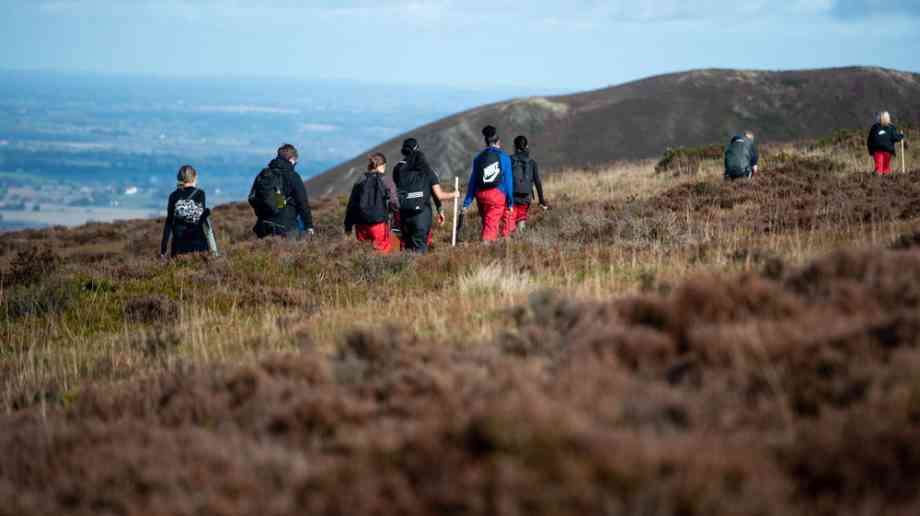
Residential and outdoor learning experiences resolve this deficiency. By placing students in natural, challenging, and novel environments, they engage in authentic problem-solving and collaboration.
This shift forces students to actively participate in risk assessment, practical resource management, and navigation – activities that build independence and confidence. Where classroom theory discusses resilience, fieldwork requires its application, developing the self-efficacy central to the government’s desired outcomes for students.
Furthermore, outdoor learning provides an unparalleled avenue for integrated curriculum delivery. For example, fieldwork we deliver at our centres transcends the abstract nature of textbook diagrams and equations by providing immediate, tangible context.
For the scientist, a biology residential transforms concepts like succession, population dynamics or quadrat sampling from definitions into active, hands-on investigations.
For the geographer, mapping an erosion process or assessing flood risk makes abstract models come alive.
A real world adventure
At our centres we can also combine this with real world adventure – not just tackling an abseil tower, but rock climbing whilst discovering the geology that makes it safe to climb or canoeing whilst identifying bird song and recording dragonfly species.
This integrated approach helps students to develop nature connectedness, personal and social skills and a love of learning outdoors.
The government’s focus on assessment review demands that students develop higher-order cognitive skills: analysis, synthesis, and evaluation. These are the very skills honed by high quality fieldwork.
Students are required not just to collect data, but critically evaluate the methods they use, troubleshoot equipment failure, interpret noisy, real-world data sets, and synthesise findings into conclusions.
This cycle of practical application and critical reflection mirrors the demands of university-level study and professional roles.
By combining this with the benefits of a residential – making your own lunch, dealing with the elements, midnight feasts, reflective moments around the campfire – students secure the skills and resilience needed for academic and life success.
Residentials
Multi-day residential structures act as a lever for both social and academic enrichment. Removing students from their familiar domestic and school routines accelerates the development of personal and environmental responsibility and collaboration skills.
Students learn to share, negotiate domestic duties, and communicate effectively. This environment is a space for building social capital and understanding diverse peer perspectives, addressing a key objective of ensuring equitable access to broadening, high-quality experiences for all students.
For many students, a residential may be their first, and sadly sometimes only, meaningful engagement with scientific methodology, environmental connection, or extended time in a diverse geographical setting. Through our work with Access Unlimited and programmes like Generation Green 2 and our Grants for Schools initiative, we’ve provided more than 10,000 learners with day and residential visits in the last year alone to ensure that enrichment is available regardless of a student’s background.
Opportunities for outdoor learning
Where residential trips are not possible for schools due to funding, transport or other barriers there is still opportunity for including quality opportunities for outdoor learning and nature connection into school timetables.
At the Field Studies Council we provide free resources for both primary and secondary to support teachers: from geography fieldwork throughout every key stage, to primary outdoor learning support for teachers to include in cross curricular planning.
We would love to see teachers taking pupils into the school grounds for all lessons, not just due to the intrinsic value of being outside, but the natural world can be a living, breathing, ever changing classroom, full of free resources.
Learning shapes, area calculations and trigonometry through measuring leaves and trees can support maths studies; writing poetry based in nature or reading a wildlife identification guide promotes literacy and oracy in English. Environmental art linked to artists such as Andy Goldsworthy and Agnes Denes can link to nature and natural materials. I could go on.
And, citizenship will play a bigger part in school life in line with the curriculum and assessment review recommendations to bring climate education onto the agenda.
Enrichment opportunities combined with citizenship subject knowledge means that fieldwork should be seen as an opportunity to get out in the school grounds.
As an organisation that has been delivering environmental education for more than 80 years, we welcome the government’s call to arms for enrichment, practical work, life skills and climate education and we’re here to help schools answer this call.
Investing in and integrating outdoor learning through residential experiences shouldn’t be seen as a supplementary activity - it is an essential investment in a future curriculum that successfully prepares all young people to be resilient, skilled, and holistically developed contributors to society.
Latest News

16/04/2026 - 12:03
Job adverts for secondary school teaching roles have dropped to their lowest level in nine years, raising fresh concerns about teacher recruitment in England.

16/04/2026 - 10:42
Ofqual has fined Cambridge OCR £270,000 for errors relating to A and AS Level physics exam papers in summer 2025.

15/04/2026 - 09:37
The government has announced the locations of 19 new Technical Excellence Colleges, backed by £175 million investment in skills training in priority areas.

14/04/2026 - 10:11
New research suggests that eight out of 10 people (80%) back banning cars in streets around schools to encourage children to travel by healthier alternatives.

14/04/2026 - 09:47
The government is proposing that schools appoint a lead governor with designated responsibility for school food, as part of its reforms to school food standards.