
Autistic pupils are often held back not by their ability, but by school environments that fail to meet their needs. Stephanie Smith, head of school at The Cavendish School, outlines five practical ways schools can create more inclusive learning environments where autistic children can engage, succeed and thrive
In England, less than half as many autistic students achieve Grade 5 or above in their English and Maths GCSEs compared with their non-autistic peers. For many students, this attainment gap isn’t because of a lack of academic ability, but reflects an education system that isn’t designed to suit their needs and ways of learning. For autistic learners in school environments designed without them in mind, the time and energy that could be spent fulfilling their personal and academic potential can be depleted before learning even begins.
This July – Disability Awareness Month – is the perfect time for schools to reflect on how they can best support their autistic students. At The Cavendish School, Cambridgeshire’s first state-maintained special autism school, we have seen how impactful designing a building, a classroom and a curriculum specifically for autistic students can be. While every school is different, there are five things that all schools can do to help autistic students engage with their learning and become happy, healthy and confident young learners.
Build trust and relationships
Many autistic students have often had negative experiences of education in the past and have little trust in the education system. They are also more likely to feel anxious (up to half of autistic people experiencing high levels of anxiety or an anxiety disorder). This means they often have higher levels of school-based anxiety, which can make it challenging to attend school and can lead to persistence absences.
Rebuilding trust is crucial to help autistic children feel comfortable enough to re-engage with their education at this stage. At The Cavendish School, this starts with home visits to meet a prospective student and their family, and identifying shared interests and allocating a dedicated member of the team to focus on relationship building in a low-stakes environment to help build feelings of trust.
Sadly, as many as 94 per cent of autistic children experience bullying , which can understandably be a huge barrier to their learning and engagement at school. Strategies like buddy systems, self-advocacy and communication practice, and educating non-autistic students about neurodiversity can help promote inclusion of autistic students by their classmates and enable them to develop a sense of belonging.
Create sensory-friendly environments
Once feelings of trust have been built and an autistic child feels able to access school, ensuring their school environment feels comfortable and welcoming is essential to helping them focus on their learning, rather than sensory discomfort.
Sensory processing – how a person experiences the world around them – is often different for autistic people. An autistic person might experience sensory inputs like light or noise more or less intensely than how other people experience them. This can lead to sensory overwhelm or to sensory seeking behaviours such as fidgeting or “rough” play.
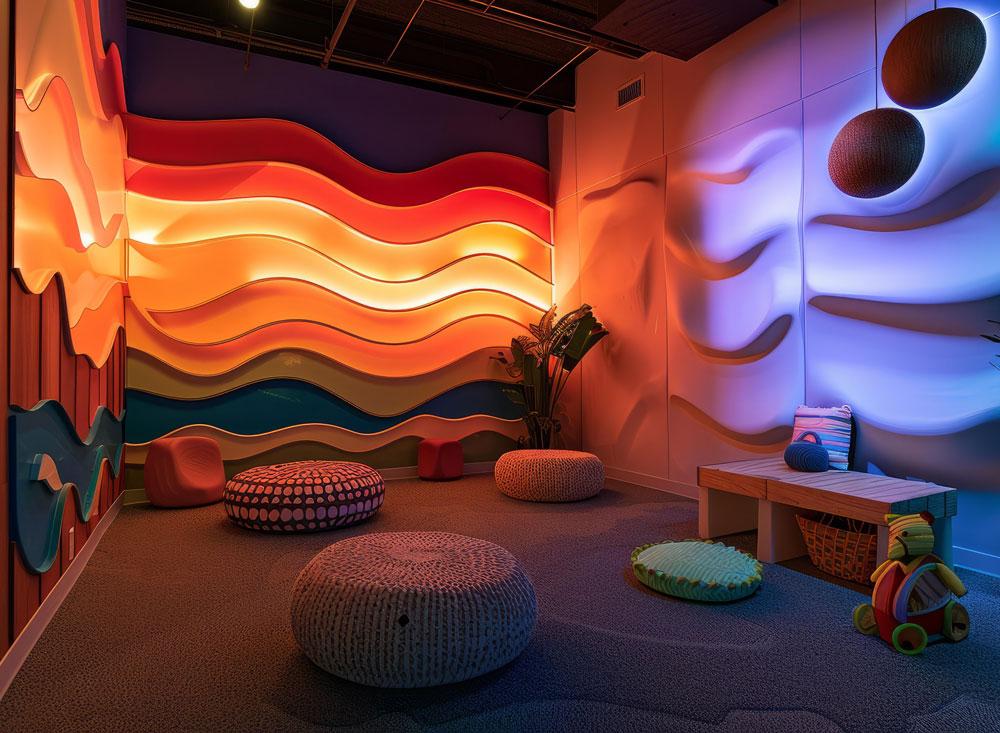
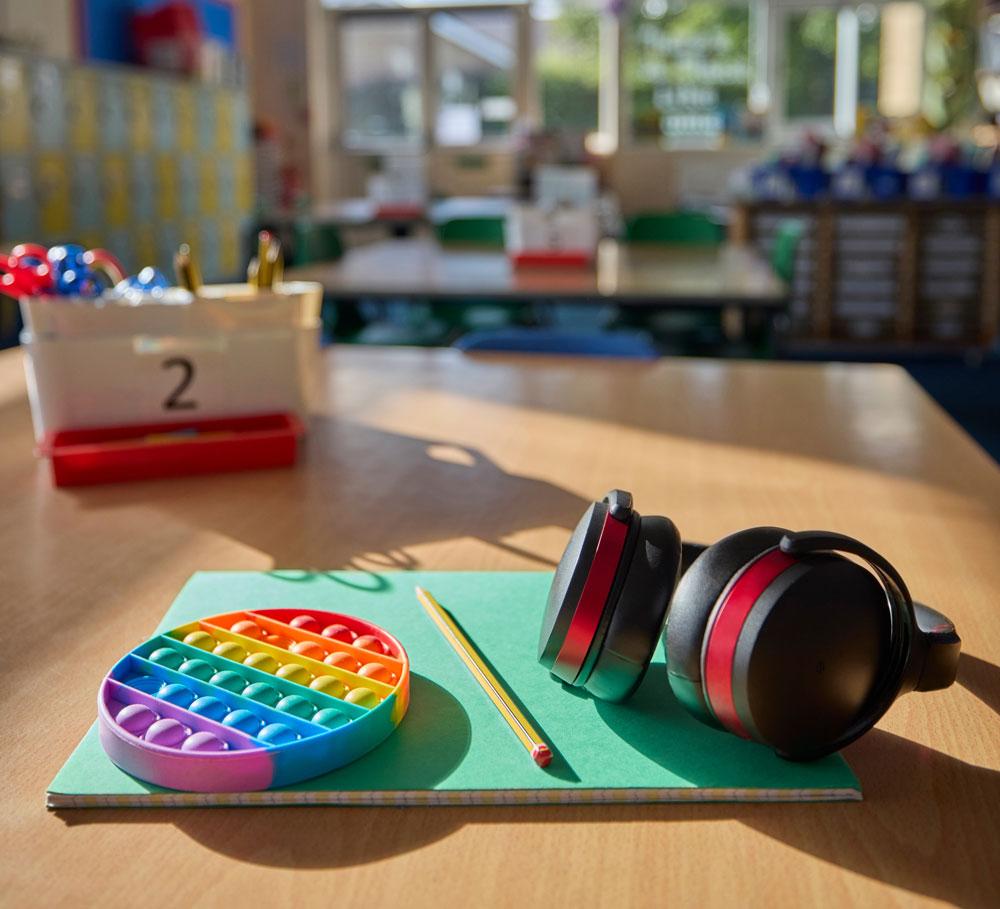
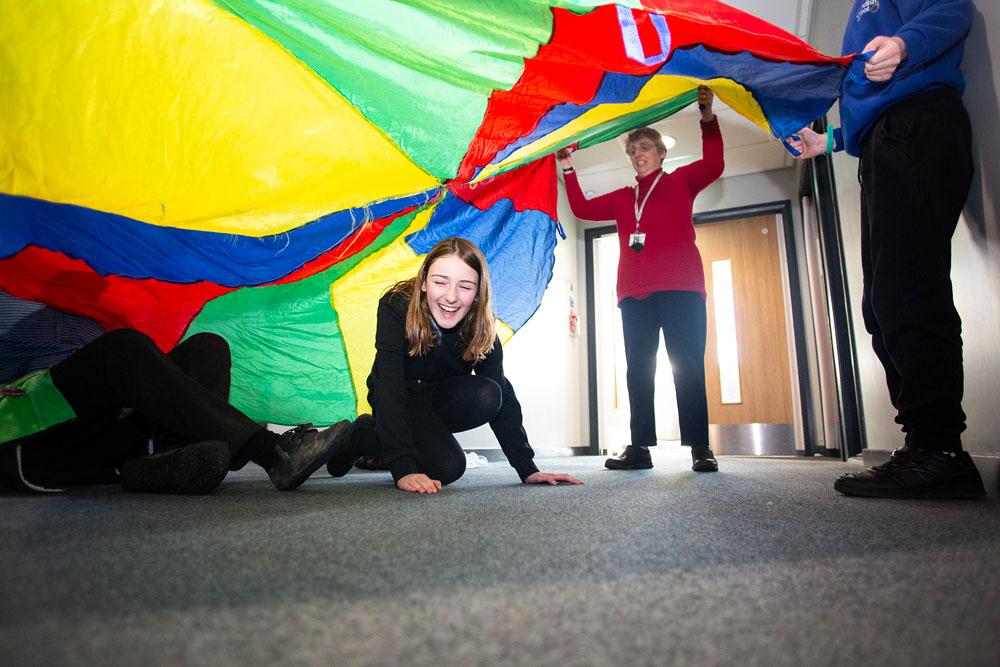
By designing classrooms to avoid causing sensory overwhelm – for example, by avoiding bright white lights, bright primary colours or overly busy displays – schools can remove a potential barrier to autistic children’s learning. Encouraging the use of sensory aids like ear defenders to reduce sensory overwhelm or fidget toys to enable regulation, can also help reduce sensory distress. Quiet breakout areas where children can decompress from overstimulation help them to feel regulated and better able to learn. For other learners, access to space where they can run, jump and swing will help them gain the sensory input they need to enjoy their lessons.
Crucially, schools should also question arbitrary uniform rules – are they really in place to help students, or to make things feel more orderly to the adults? Strict uniform policies requiring specific colours, cuts or fabrics can force autistic children to wear clothes which are itchy or restrictive, increasing sensory overwhelm and reducing their capacity to learn. At The Cavendish School, we have a relaxed uniform policy that replicates many workplaces: comfortable clothing that helps our students perform at their best.
Focus on the whole child, not just academics
In an education system governed by league tables, schools can feel incentivised to maintain a narrow focus on academic outcomes. Yet, the purpose of education is to ensure that our children and young people have the knowledge, skills and values for achieve their aspirations and contribute meaningfully to the world.
At The Cavendish School, we focus on “enabling the self” – creating learning which allows students to become happy, healthy adults who flourish in all aspects of life. As part of this, we utilise the International Baccalaureate (IB) Primary Years Programme, which focuses on communication, independence and self-advocacy as well as knowledge acquisition. The IB’s learner profile emphasises attributes like being open-minded, principled and communicative, which are integrated throughout students’ learning to ensure that whenever students are learning about the world, they are also learning how to move through it.
Give hooks for learning
Many autistic children have strong, deep interests in specific topics, often known as “special” interests. By connecting learning to these topics, we can create what Attention Autism deems “irresistible invitations to learn”, positive learning experiences which invite autistic children’s enthusiasm. For example, at The Cavendish School, we use “Thomas & Friends”, “Harry Potter” or esports, topics with which many of our students feel a strong affinity, in our curriculum planning to connect learning experiences to our students’ interests and make their learning memorable, interesting
and fun.
Because of differences in how autistic children’s brains integrate context, perceive social intentions, and organise information, they tend to process information literally. As such, they can benefit from help in making explicit connections between the subjects and skills they learn about and their real-world applications. This means that the compartmentalised learning structure of the National Curriculum is not always suited to the needs of autistic students. Through the PYP, we explore big conceptual ideas, such as ‘Who we are’, which directly applies to a student’s life. Consistently showing students how their learning is related to the real world helps them to find greater relevance in their classroom learning and to start to build connections between different subject disciplines.
Make implicit learning explicit
For autistic children, many aspects of the world can seem encoded and difficult to understand. Instructions that teachers think are clear might rely on idioms or implications that present a barrier to autistic children’s understanding, while unspoken rules such looking at the teacher to show a child is listening can be hard for autistic children to infer. Ensuring that instructions and expectations are outlined explicitly helps autistic children to participate and access learning.
Making the implicit explicit also means actively teaching the “hidden curriculum”: the social expectations children are expected to learn purely by being in a school environment. Because autistic children often process information literally, inferring expectations such as queueing through observation alone can be challenging. Actively teaching these unwritten expectations can help autistic children understand social differences, reducing anxiety, confusion and misunderstandings.
Building inclusion from the ground up
True inclusion for autistic children requires more than small adjustments. It means designing schools with autistic students in mind from the start. From classrooms to curricula to communication, every aspect of the learning experience can be an invitation for autistic students. By building learning experiences around autistic children’s needs, rather than only adjusting them retrospectively, schools can create environments in which autistic children are able to move beyond participation, but to thrive.
About the author
Stephanie has more than ten years of experience working in and alongside the autism community across mainstream primary, secondary and special schools. She is head of school at The Cavendish School, Cambridgeshire’s first state-maintained special autism school, and director of SEND at the Eastern Learning Alliance.